 Skip to content

Baja California is a Mexican peninsula, long and narrow (1,250 km in length and up to 200 km in width), located south of the American state of California. It is one of the most untouched areas on the planet (according to a 2015 estimate, the second least populated region in the world), with a low population density almost entirely concentrated in a few cities, vast desert spaces, and a fortunately still pristine natural environment.
Separated from the rest of Mexico two million years ago, it features volcanic-origin mountains running parallel to the coast, reaching heights of 3,000 metres in the north, extensive plains near the coasts (the largest of which are on the Pacific side), and a vast central desert area. This desert includes two significant protected areas: the Valle de los Cirios and the Vizcaíno Desert, unique ecosystems home to endemic plants and animals.
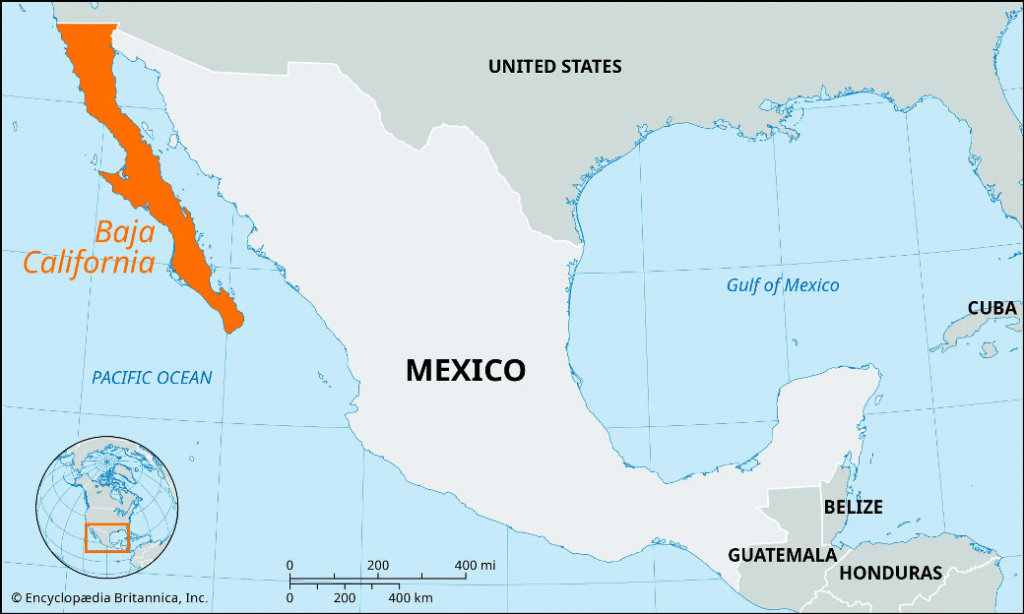
It is divided into two regions, Baja California Norte and Baja California Sur, following the Mexican-American War in the mid-19th century, which cost Mexico the loss of Texas, New Mexico, and Alta California. Thanks to the determination and sacrifice of the Mexican people, the United States was unable to occupy the peninsula as well. At the end of the war, Baja California was split into two territories, each with its own government and capital: Mexicali in the north (although Tijuana is the most well-known city) and La Paz in the south.
The Nature of Baja California
From a naturalistic perspective, Baja California Sur is characterised by the presence of large mountain ranges. The Sierra de La Giganta, not far from the historic colonial town of Loreto, is one of the least explored areas of Baja California but is well worth a visit. Home to endemic plants and animals such as the Borrego (the Desert Bighorn Sheep, unfortunately endangered), it also boasts a remarkable archaeological area, a UNESCO World Heritage Site, rich in extraordinary and perfectly preserved rock paintings. These can be visited on foot or by mule, starting from a timeless small mountain village and following enchanting canyons. Another significant mountain range lies further south, reaching a height of 2,080 metres. The Sierra de la Laguna, a Biosphere Reserve and UNESCO World Heritage Site, is a complex and unique ecosystem due to its extreme climatic variety, transitioning rapidly from arid temperatures and desert landscapes to palm oases and water pools, and even to cool, humid areas characterised by broadleaf forests, oaks, and evergreen pines. The Sierra also features small natural hot springs amidst untouched nature.
The Desert of Baja California
The Vizcaíno Desert, which spans the central part of the peninsula from the Sea of Cortez to the Pacific, is one of the most important protected areas in Baja California Sur and one of the largest biospheres in the world. Travelling through it, along the road from Santa Rosalía into its interior, you can spot the silhouettes of three ancient, now-extinct volcanoes known as Las Tres Vírgenes (El Viejo, El Azufre, and El Virgen). The last recorded eruption, documented by a Jesuit priest, dates back to 1746.
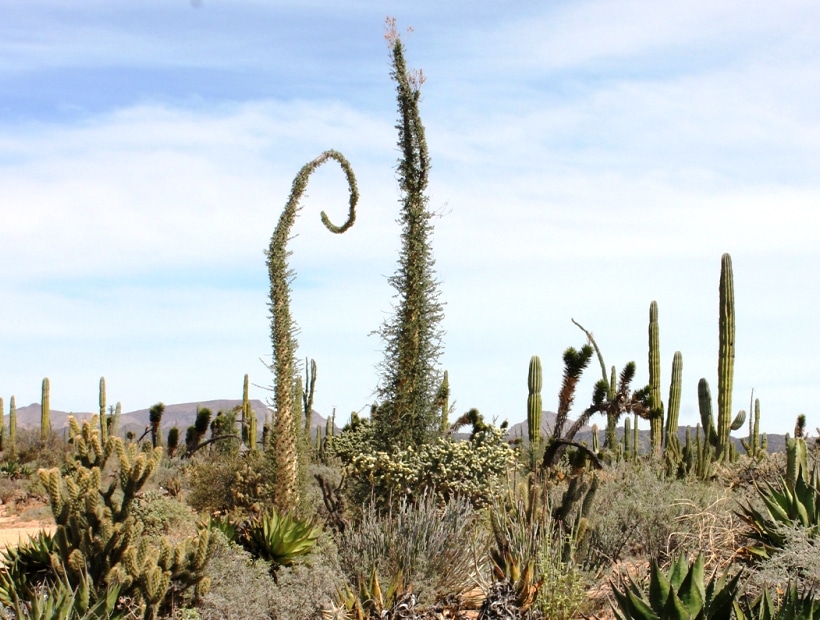
This area is the natural habitat of 500 plant species, 4 amphibians, 43 reptiles, 200 bird species, and over 50 mammals found exclusively in this region. The high level of endemism is due not only to its isolation but also to its unique climatic conditions. In these arid zones, the fauna is limited to small mammals such as hares, kangaroo rats, and coyotes, as well as reptiles like the feared rattlesnake, numerous birds, and insects. However, moving to higher altitudes and further north, where vegetation is more abundant and temperatures cooler, one can encounter pumas, bobcats, other wild cats, mule deer, bighorn sheep, pronghorns, and many other animals.
Among the endemic plants, the Vizcaíno Desert is characterised by the peculiar Fouquieria columnaris, commonly known as Cirios, which can reach a height of 20 metres. Many of the numerous desert plants in Baja California Sur attract the interest of botanists and enthusiasts. Some of these cacti, due to their rarity and uniqueness, hold commercial value and are therefore protected by laws. The most common cacti are the cardones (Pachycereus pringlei Britton & Rose), with their distinctive candelabra shape, which can grow up to 15 metres tall.
These are millennial cacti, as they grow only one centimetre per year and only bloom after reaching a century of age. Witnessing the desert in bloom is a breathtaking spectacle, especially when considering the time and struggle these plants endure to reach maturity and provide nectar for the numerous hummingbirds that inhabit the area.
The Sea of Baja California
Baja California Sur also boasts a more lush, tropical side. The temperature difference between the cooler Pacific coast and the warmer Sea of Cortez coast makes these areas verdant and rich in shady palm groves. The plains along both coasts enjoy a pleasant annual average temperature of around 22°C, with a dry climate except for the summer, which is very hot and, in September, humid due to heavy rains that sweep across the peninsula.
While the desert’s terrestrial beauty may not appeal to everyone (it requires a keen eye to appreciate its hidden wonders), the same cannot be said for the sea, which bursts with life and is the main draw for the significant influx of tourists visiting these shores each year.
Pristine beaches, white or golden sands, crystal-clear waters, seashells, and a variety of colourful tropical fish, manta rays, sea turtles, and dolphins delight swimmers. The peninsula is also rich in islands and islets, with three large ones on the Pacific side and many smaller ones in the Gulf of California. Some of these are part of enchanting marine parks that can be visited by boat, offering opportunities for diving or snorkelling to admire the abundance and diversity of marine life. Numerous lagoons, estuaries, and mangroves form another fascinating and rich ecosystem.
The Magical Encounter with Whales
The star of these waters is undoubtedly the grey whale. At the end of September or early October, these majestic mammals begin their migration, leaving icy Alaska to arrive in these warm waters around early January. Here, they engage in courtship rituals and give birth to calves conceived the previous year.
During the longest migration known, they never stop, travelling 16,000 kilometres, day and night, until they reach the coasts of Baja California. Almost aware that humans pose no threat here, they approach boats carrying small groups of curious tourists, who are often moved to tears when these marine giants show their appreciation with water spouts, enjoy gentle scratches on their backs and snouts, and gaze into human eyes with their ancient, mysteriously sympathetic and understanding eyes.
Since the first gentle contact between a whale and a human in 1957, the Mexican government has launched a forward-thinking campaign to protect and conserve the marine and terrestrial habitat of these mammals, crucial for their feeding and reproduction. Through the Ministry of Environment and Natural Resources, laws and precise regulations for whale watching have been enacted, granting permits to a limited number of small boats, determining the distance and speed to maintain during approaches, and prohibiting the use of sonar and probes to detect their presence, as well as fishing and any aquatic or aerial activities in the protected area to avoid disturbances during mating or birthing.
Tourism with Respect
This policy, which has also yielded economic benefits by promoting tourism, has been successful in conserving the species. This year, the National Commission of Natural Protected Areas celebrated the birth of 14 grey whale calves and, more broadly, recorded the presence of 830 cetaceans, including 268 calves and 562 adult females, between the Ojo de Liebre Lagoon and San Ignacio Lagoon.
Grey whales are just one of the species that migrate annually to the waters of southern California. A couple of months earlier, in November, humpback whales, the ocean’s greatest singers (despite lacking vocal cords), arrive from British Columbia, Washington State, and Northern California. Along with blue whales and other cetaceans, they can be spotted by boat from various coastal locations in Baja California, where they remain for several months of the year.
Other thrilling encounters, not just emotionally but also in terms of awe, include sightings of sperm whales, whale sharks, and especially sharks in Cabo Pulmo, the most successful marine park in the Western Hemisphere. The park is home to 6,000 marine species living along the largest coral reef in North America. A must-visit for sea lovers, it amazes diving and snorkelling enthusiasts with swirling schools of fish of all shapes and sizes, mobulas, sea turtles, and even tiny, bizarre, and colourful nudibranchs.
Travelling in Baja California
Travelling in Baja California is feasible independently, booking flights from Europe with a stopover in Mexico City or Los Angeles. However, to truly savour Baja California and explore its many hidden gems, it is essential to rely on local organisations like Baja California Travel. They can arrange self-drive or guided tours, offering support at any time and avoiding the unpleasant inconveniences that can ruin your experience in a challenging territory like Baja California.