 Skip to content

Encountering grey whales (Eschrichtius robustus) in Baja California is undoubtedly one of the most thrilling experiences one can have while travelling through this wild Mexican peninsula.
It is perhaps the most memorable moment for those dreaming of a true connection with untouched nature. The spectacular landscapes of Baja, nestled between crystal-clear seas, silent deserts, and mysterious lagoons, provide a stage unlike any other in the world.
Here, you can witness the migration, courtship rituals, and the birth of calves of these fascinating marine mammals.
From Arctic Ice to Warm Waters
The story of the grey whales is an epic journey that unfolds every single year, offering one of the most extraordinary natural spectacles on our planet.
Each winter, grey whales embark on one of the longest migrations known among all mammals on Earth. They leave the cold and unforgiving waters of the Arctic, travelling along the coastal regions of Alaska. Covering over 10,000 kilometres, they reach the warmer, welcoming, and safer waters of Baja California, located in the northwestern part of Mexico.
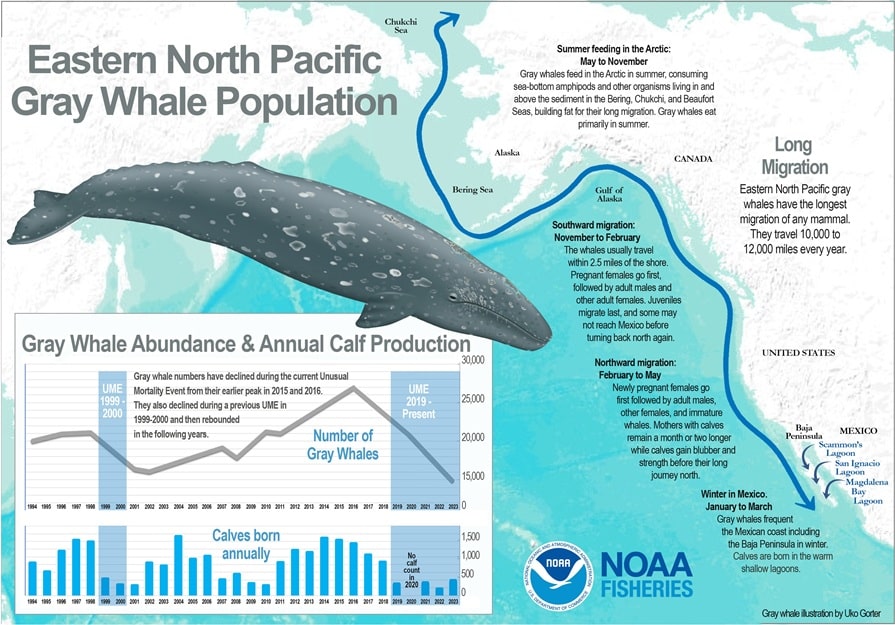
This incredible expedition covers an impressive round-trip distance exceeding 20,000 kilometres. The journey is not a whim but a response to vital needs. The whales seek a protected environment to mate and, most importantly, to give birth to the calves conceived the previous winter. The icy northern waters, teeming with large predators, would not allow the survival of the newborns. The calves, in fact, are born without the thick layer of blubber necessary to withstand freezing temperatures.
The Lagoons of Baja California
To ensure the survival of their young, mothers carefully choose birthing locations. The lagoons of Baja California prove to be the perfect cradle for these ocean giants.
The Sanctuary of Reproduction
Among the most famous sanctuaries are San Ignacio Lagoon, Ojo de Liebre, and Guerrero Negro. These areas provide the ideal habitat: shallow, brackish, and pleasantly warm waters. The very shape of the coastline creates a natural barrier that keeps external threats, such as pods of hungry orcas, at bay.
In addition to being a safe haven for birthing, these lagoons allow adult males to easily defend their territory during the delicate courtship rituals. The powerful tail slaps echo across the water, and spectacular breaches can be witnessed. In these same lagoons, a millennia-old cycle of life unfolds, deeply connecting the whales to the ancient traditions of the local populations.
A Story of Survival and Conservation
However, the relationship between humans and these cetaceans has not always been peaceful. The history of grey whales hides a dark past and a struggle for survival.
During the 19th century, ruthless commercial whaling caused a dramatic collapse in their population.
From the thousands of individuals that once filled Baja’s bays around 1850, their numbers dwindled to just a few dozen survivors within two decades.
The sea seemed destined to lose their peaceful presence forever.
Fortunately, a turning point was reached. In 1946, the first international protection treaties were established, saving the species from the brink of extinction.
Thanks to strict conservation policies and the passionate involvement of Mexican communities, the population of the eastern Pacific grey whale has rebounded. Today, their numbers have stabilised at around 10,000 individuals.
These whales continue their incredibly long journey with renewed hope.
The Magical Encounter with the Gentle Giants
Witnessing the return of these creatures is an immense privilege. The interaction that forms between humans and whales in these places defies all imagination.
The optimal period to admire grey whales in Baja California spans from mid-January to early April.
During these winter and spring months, the lagoons gradually fill with life. The whales spend crucial months here giving birth, nursing their calves, mating, and physically preparing for the arduous return journey to the Arctic.
Excursions take place aboard small boats, affectionately called “Pangas,” which carry small groups of visitors.
Everything is conducted with the utmost respect for the animals, following strict environmental sustainability rules.
This care ensures that the cetaceans are not disturbed and feel comfortable in their natural habitat.
A Life-Changing Connection
What makes this experience truly unparalleled is the extraordinary sociability of grey whales.
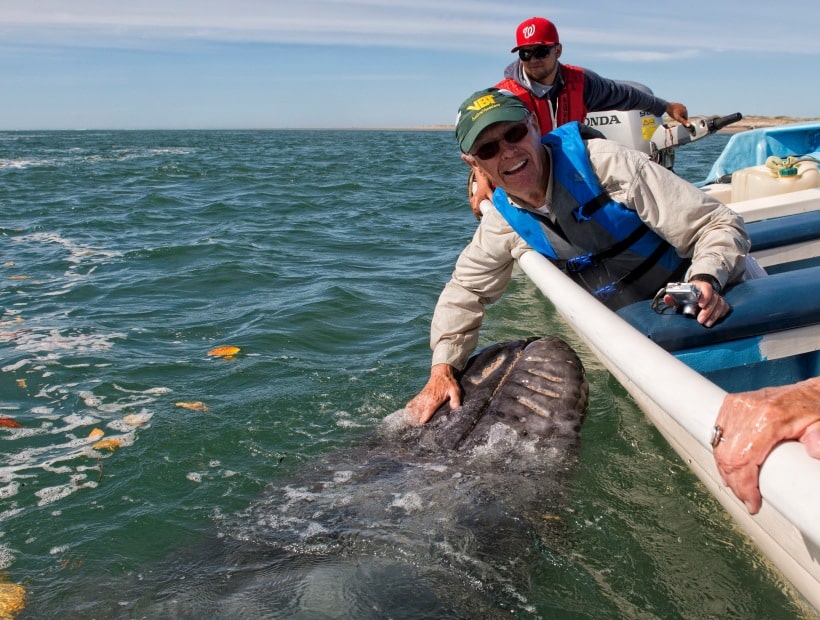
Amazingly, they seem to accept and even actively seek contact with humans. They approach the small boats spontaneously, surfacing right next to the observers. They allow tourists to touch their rough skin and, at times, even let themselves be embraced.
Often, it’s the calves that are the boldest and most curious. They swim confidently alongside their protective mothers, lifting their heads out of the water to gaze at the people on board with their large, wise eyes.
They seek genuine eye contact, surface to breathe, and spray water into the air, eliciting cries of wonder from those present. Locking eyes with such a majestic and intelligent being evokes an emotion that stays with you forever.
Meet the grey whales in Baja California goes far beyond a simple tourist sighting. It represents a profound reconnection with the purest force of nature.