 Skip to content

The missions of Baja California have their roots in the 17th century, when Spanish missionaries began settling in the region to evangelise the indigenous populations and spread the Catholic faith.
The missions of Baja California and the Camino Real are two closely connected elements that played a crucial role in the history and culture of the peninsula.
The missions were religious and educational settlements founded by Spanish missionaries between the 17th and 19th centuries, while the Camino Real was a network of roads that linked these missions to each other and to the rest of the Spanish colony.
The first mission was founded in 1697 by the Jesuits, who were the first to settle in the peninsula and begin the process of evangelisation. This mission, called Nuestra Señora de Loreto, was established by Juan María de Salvatierra on the eastern coast of the peninsula, in the area now known as Loreto.
In the following decades, other missions were founded by Jesuits, Franciscans, and Dominicans, who joined the evangelisation efforts.
These missions were often built around a church and a convent and included agricultural lands and other structures necessary to sustain the religious community and the natives converted to Christianity.
The missions were not only places of worship and prayer but also served educational and social roles. Missionaries taught the natives European agricultural techniques and instructed them in the Spanish language and European culture. Additionally, the missions acted as healthcare centres, providing medical care and hospital services to both natives and Spanish settlers.
The Jesuits were the first missionaries to arrive in the Baja California peninsula and establish missions. Their presence had a significant impact on the lives of the indigenous populations and the development of the missions themselves. The Jesuits were particularly focused on evangelisation and the education of the natives, making their missions centres of learning and cultural training.
However, in 1767, the Jesuits were expelled from all Spanish territories following a decree by King Charles III of Spain. The missions in Baja California were then handed over to the Franciscans, who continued the work of evangelisation and development.
The Franciscans, in turn, were replaced by the Dominicans in 1773.
The Dominicans managed the missions of Baja California until the end of the Spanish colonial period in 1821. During their tenure, the Dominicans founded new missions and expanded the Camino Real network, further consolidating the Spanish presence in the peninsula.
The Camino Real was a network of roads that connected the missions of Baja California to each other and to the rest of the Spanish colony. These roads were often challenging to traverse, cutting through rugged landscapes such as deserts, mountains, and forests.
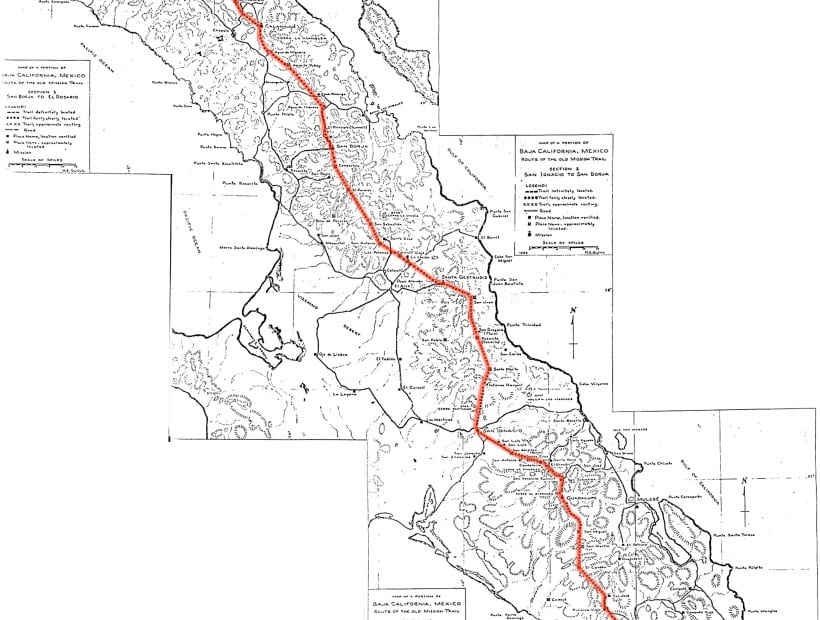
These roads were of fundamental importance for the functioning of the missions and the spread of the Catholic faith in the region. The Camino Real allowed missionaries to travel between the various missions, bringing with them their knowledge and support.
The development of the Camino Real was a gradual process that evolved alongside the establishment of missions along the peninsula. Initially, the roads were simple trails created by the missionaries themselves and the natives converted to Christianity.
However, over time, and with the increase in the number of missions, the road network expanded and developed, becoming a vital element for life and communication between the missions.
The Most Important Missions
Numerous missions were established along the Camino Real, some of which became particularly important and significant throughout history. Among these are:
Nuestra Señora de Loreto, the first mission founded in Baja California, which remained a central reference point for all other missions in the region;
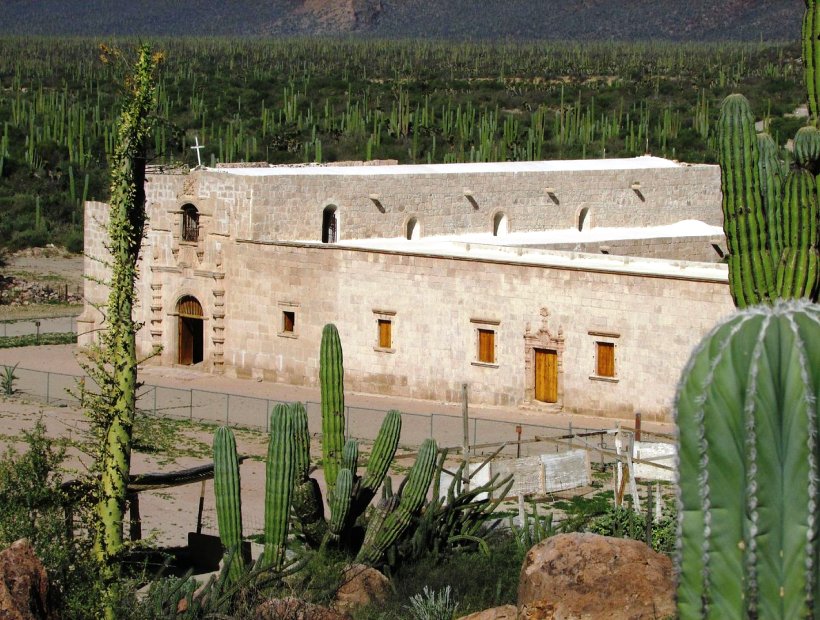
San Ignacio, founded in 1728, renowned for its rock paintings and its strategic location along the Camino Real;
Santa Rosalía de Mulegé, founded in 1705, known for its stone church and its significant role in spreading Spanish culture in the region.
In addition to these missions, numerous other religious and civil settlements were established along the Camino Real, contributing to the consolidation of the Spanish presence in Baja California and the spread of the Catholic faith among the indigenous populations.
Before the arrival of Spanish missionaries, Baja California was inhabited by various indigenous groups, including the Cochimí, Guaycura, and Pericú.
These populations had distinct cultures and traditions, but all were profoundly affected by the arrival of the Spanish.
The impact of the missions on the lives of the natives was immense. Many indigenous people were converted to Christianity and adopted Spanish traditions and culture, partially losing their original cultural identity.
Additionally, the coexistence between natives and Spaniards led to intense cultural blending, leaving an indelible mark on the history and culture of Baja California.
However, the arrival of missionaries and missions did not solely bring benefits to the indigenous populations. Many of these groups were decimated by diseases brought by Europeans, such as smallpox and tuberculosis, to which the natives had no immunity. Furthermore, the imposition of Spanish religion and culture led to conflicts and tensions between the natives and missionaries, which in some cases escalated into revolts and uprisings.
After Mexico’s independence from Spain in 1821, the missions of Baja California entered a period of decline. Many were abandoned or looted, and the Camino Real fell into disuse. Baja California became an isolated and sparsely populated region, and the missions were forgotten for decades.
However, starting in the mid-20th century, a process of restoration and enhancement of the missions and the Camino Real began. This effort spanned several decades and involved various governmental and non-governmental organisations.
Today, many of the missions have been restored and opened to the public, becoming important centres for cultural and religious tourism. The Camino Real has been partially reconstructed and marked, allowing visitors to follow in the footsteps of the missionaries and discover the most significant sites in Baja California’s history.
The missions and the Camino Real have left a profound imprint on the region’s history and culture. These structures contributed to spreading Spanish culture and religion among the indigenous populations, but they also gave rise to a unique culture and identity for Baja California.
The missions and the Camino Real now represent a cultural and historical heritage of inestimable value, which must be preserved and cherished for future generations.
Their cultural and religious significance is also evidenced by their inclusion on UNESCO’s World Heritage Sites list.