 Skip to content

The Sea of Cortez is a natural wonder. Scientists claim that this sea, nestled between mainland Mexico and the Baja California Peninsula, is one of the most biodiverse on the planet. It is home to over 900 species of fish, thousands of invertebrate species, and numerous marine mammals, including well-known ones like sea lions, dolphins, and whales.
Situated between the Baja California Peninsula and various central Mexican states, it is approximately five million years old and is considered one of the youngest seas in the world.
While the terrifying underwater volcanic activity and the San Andreas Fault created the Baja California Peninsula, triggering powerful earthquakes, they simultaneously made way for what is now the Sea of Cortez.
The explorer Hernán Cortés, intrigued by fanciful tales of an island ruled by Amazons wielding golden weapons and clear waters with pearl-laden seabeds, ordered several expeditions to fully explore the territory, which at the time was believed to be an island. After thorough investigations, the expeditions added Baja California to maps, depicting it as a peninsula connected to the North American continent in the north.
But how can a sea that no longer receives nutrient-rich freshwater from the Colorado River still be so abundant? The answer lies in its unique oceanographic history.
The History of the Sea of Cortez
The Pacific Plate once moved northwest along Mexico’s western coast when the Sea of Cortez did not yet exist.
For millions of years, the plate’s movement slowly rotated counterclockwise, creating immense stress on western Mexico. This eventually shifted the fault line eastward and gradually tore Baja California away from the mainland.
The peninsula rose along the western side of the newly forming gulf. A dramatic view of this escarpment can be seen near the city of Loreto. From the south, the ocean filled the recently formed basin, creating the youngest gulf in the world. It now boasts remarkable depth and spans over 80 miles in width. The Pacific Ocean’s rising and falling tides generate massive movement within the gulf.
Water mixes to a depth of 1,500 feet, and in winter, it creates a continuous clockwise current around the gulf at 0.67 mph, while in summer, the current flows counterclockwise. The northern end experiences a tidal range of 32 feet, the third largest in North America. Wind-induced currents also cause significant water movement during winter. Wind moves water at 3% of its speed and transfers up to 40% of its energy.
When strong winds push water away from an island or coast, it is replaced by colder water from below in a process called upwelling. This deeper water is not only colder but also rich in nutrients. With the energy provided by sunlight, voilà, the blue water transforms into red water due to the abundance of phytoplankton it contains. The Sea of Cortez has even been called the Vermilion Sea.
This phytoplankton soup feeds invertebrates, which are then devoured by over 800 types of vertebrates, including fish (which in turn feed other fish) and whales. The extraordinary richness of marine life in this sea led French explorer Jacques Cousteau to call it “the aquarium of the world.”
The Current Situation
Unfortunately, decades of exploitation and commercial development have taken a toll on this rich sea, drastically reducing fish populations and causing pollution-related disasters.
The Sea of Cortez, also known as the Gulf of California, has recently made headlines due to the severe threat of extinction faced by the Vaquita, a rare species of porpoise endemic to the northern part of the gulf. It is the most endangered marine mammal in the world, and its recent decline is tragically staggering.
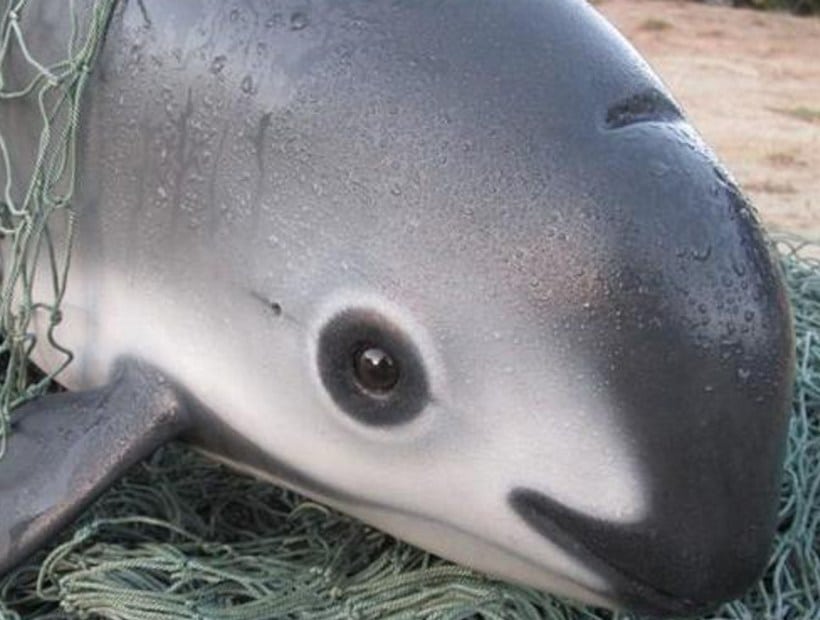
In the past decade, the Mexican government has made efforts to reduce pollution and overfishing. Numerous marine reserves and national parks have been established to protect endangered marine wildlife and raise public awareness about the importance of safeguarding threatened species. However, poaching remains a significant issue, as large portions of the population rely on fishing for their livelihood.
For now, dolphins and manta rays still leap majestically from the sparkling waters. Beneath the surface, a kaleidoscope of vibrant tropical fish, such as the rainbow wrasse and butterflyfish, swim gracefully around golden corals. But to preserve the Sea of Cortez as the jewel of the North American continent and to safeguard its extraordinary marine ecosystem, much more serious efforts will be required.
Stricter enforcement of existing laws will be necessary, along with the introduction of new regulations to expand protected marine areas and further reduce fishing activities.