 Skip to content

Just beyond the border with Mexico, the Baja California Desert stretches southward, embracing the peninsula and meeting the Sea of Cortez along the coast.
In this arid landscape, seemingly dominated only by cacti and rocks, water springs and remote oases offer unexpected relief to those venturing into its nearly 50,000 square miles.
The rugged and imposing mountains rise between two seas: the Sea of Cortez and the Pacific Ocean, offering breathtaking views.
This extraordinary variety of landscapes makes Baja California one of the most unique regions in Mexico, with its spectacular ocean vistas and mountains shimmering in changing colours.
Thousands of kilometres of wild, untouched desert alternate with hundreds of white sandy beaches, lapped by crystal-clear turquoise waters that host an extraordinary marine biodiversity. Immersing yourself in this scenery is an unforgettable experience.
The Baja California Desert, characterised by high temperatures and low humidity, is home to unique vegetation adapted to extreme conditions. Plants such as Mesquite, Palo Verde, and Palo Blanco line the dirt roads, while other species like ocotillos, agaves, yuccas, acacias, and Mexican blue palms dominate the landscape.
Among the most unusual plants is the boojum tree (Cirio), an endemic species of Baja California.
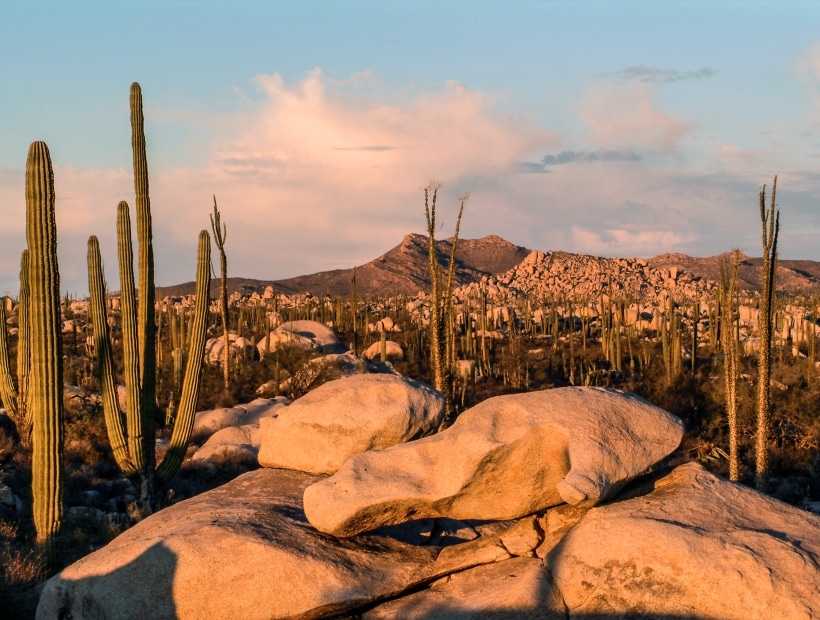
Moreover, the peninsula is home to over 110 species of cacti, many of which are unique to the world. Among them, the cardon, the largest cactus on the planet, can reach up to 17 metres in height and live for as long as 400 years.
During blooming season, cacti put on an extraordinary display, with vibrant flowers that attract hundreds of iridescent hummingbirds.
Like the Galapagos in Ecuador, Baja California is a biodiversity paradise, with a high rate of endemism due to the isolation of its islands and remote areas.
Desert animals have adapted to extreme conditions, developing unique behaviours and characteristics. Many, such as rodents, lizards, and snakes, are active only during the cooler hours of the day, while their light colouring helps them camouflage and reflect the sun’s heat.
Among the most famous inhabitants is the Roadrunner, made popular by the cartoon “Wile E. Coyote,” along with a wide range of reptiles, including geckos, iguanas, and rattlesnakes. Bats, essential for cactus pollination, are particularly abundant.
Among mammals, the coyote is the most widespread, but grey foxes, bobcats, mule deer, and bighorn sheep, the desert’s iconic sheep, can also be spotted.
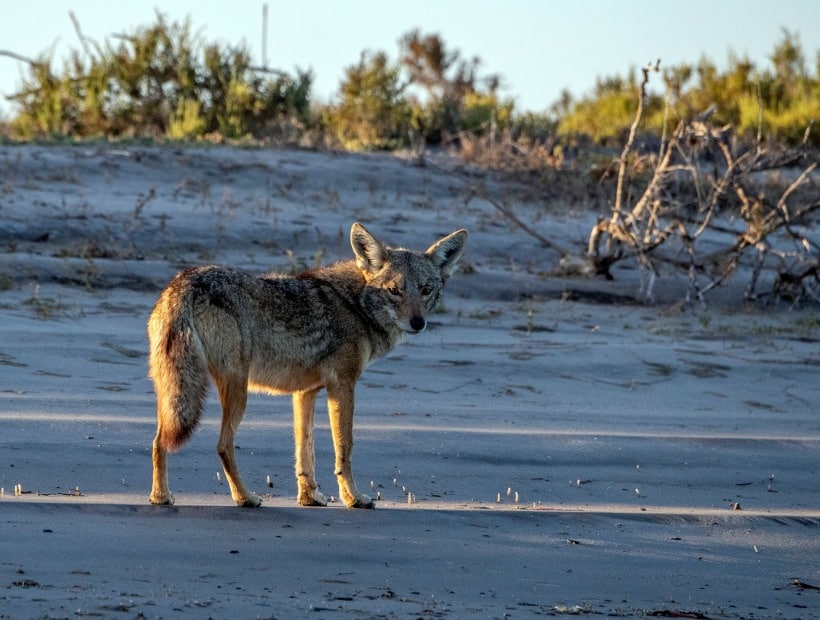
In the mountainous regions, pumas roam, while the peninsula is home to around 300 bird species, some of which are endemic.
Despite its name, the Baja California Desert is far from desolate. It is an ecosystem teeming with life, natural beauty, and surprises that inspire wonder and emotion. Here, nature reveals its full strength and diversity, offering a unique experience to anyone who chooses to explore it.
Baja California is a land of contrasts, with a vast and sparsely populated territory. Small villages, often inhabited by just a few hundred people, preserve ancient rhythms of life, dictated only by the cycle of day and night. In the most remote regions, such as the Rancho, time seems to have stood still.
Traversing this land has always been a challenge, from the native peoples to the missionaries of the 17th century, and now to modern adventurers who explore it in off-road vehicles, kicking up clouds of dust.
Although technology has made everything more accessible, a journey through Baja California still retains the authentic flavour of a true adventure.